
A groundbreaking Brain Cancer Centre funded national research project has received $18.8 million from the Australian Government’s MRFF fund to develop brain-penetrating drugs to overcome one of the biggest barriers in brain cancer treatment: the blood-brain barrier.
We’re incredibly proud that The BCC has invested $1.88 million in seed funding over four years, helping establish and progress this pioneering research program.
The team will develop a new approach to deliver cancer-killing drugs into the brain, targeting high-grade gliomas including glioblastoma in adults and diffuse midline glioma in children.
The blood-brain barrier is a protective shield that currently blocks most drugs from ever entering the brain.
“I’m incredibly proud that our CB4BC community can see the direct impact of their generosity. Their contributions funded the first stages of this research, and that investment has now been leveraged into almost $19M to drive a groundbreaking national project. This is a moment for our community to celebrate. When we back the brightest minds in medical research, united by a single focus on brain cancer, the impact for patients can be extraordinary. I’m so excited by this progress and the hope it brings for patients facing this devastating disease.”

Carrie Bickmore OAM, Founder & Chair, Carrie’s Beanies 4 Brain Cancer
At a glance
- Brain Cancer Centre researchers from a collaborative group of institutions around Australia will develop a new generation of brain-penetrating drugs that can cross the blood-brain barrier, in a landmark project that has received $18.8m in funding from the MRFF
- The team will use a pioneering approach to find effective drugs for high-grade gliomas, including glioblastoma in adults and diffuse midline glioma in children.
- Experts from seven medical research institutes and hospitals across Australia will create an accelerated pathway towards establishing a drug development pipeline that will lead to clinical trials for brain cancer.
The team
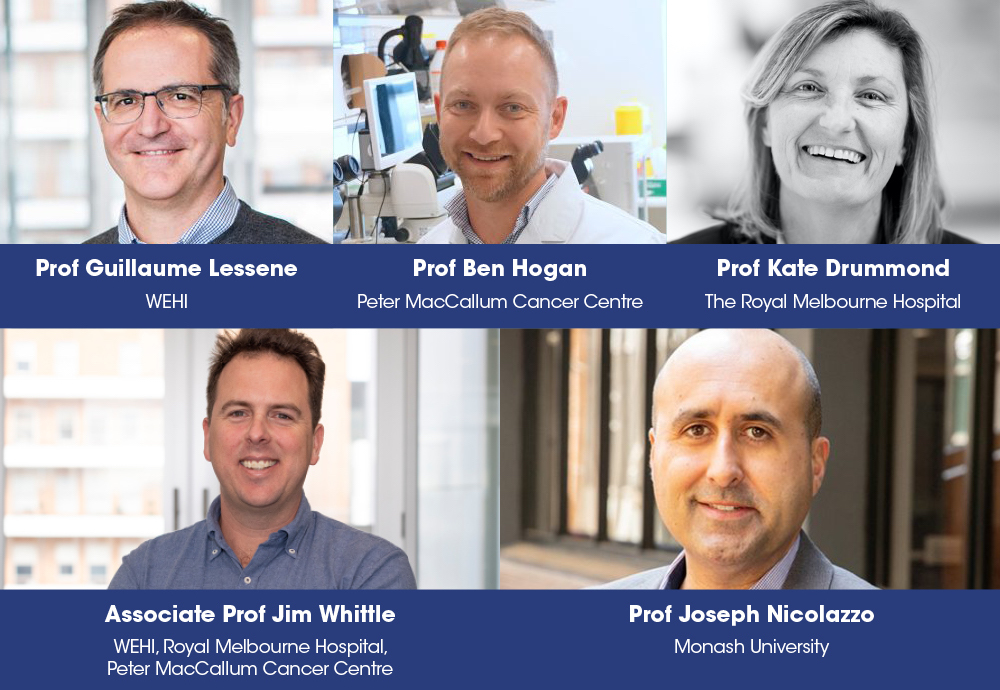

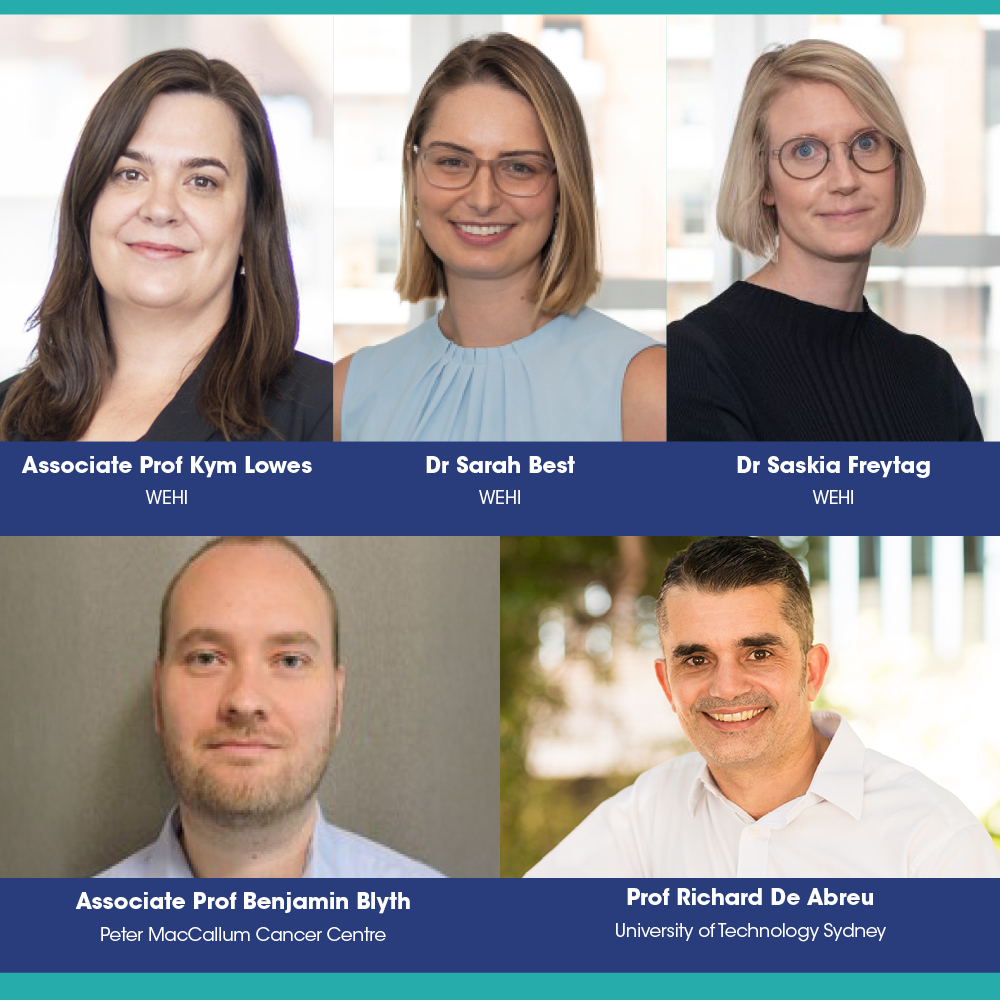
Partners
This project brings together experts from across The Brain Cancer Centre’s Australia wide partners including WEHI, the Royal Melbourne Hospital, Peter MacCallum Cancer Centre, the Monash Institute of Pharmaceutical Sciences, University of Queensland and the University of Technology Sydney.
 |
 |
 |
 |
 |
 |
 |
|

The blood-brain barrier strictly controls what can enter the brain to prevent toxins and infections from passing through. It is essential to maintaining the brain’s overall health.
But this barrier is so fiercely protective, it also blocks around 98% of cancer drugs from entering the brain.
“Therapies that have driven breakthroughs in other cancers offer little hope for brain cancer patients, meaning survival rates have barely shifted in decades. Our project will deploy a revolutionary strategy to deliver drugs directly into the brain and tackle the formidable blood-brain barrier”
Chief Investigator Prof Lessene, WEHI
This is the first time this approach will be used to deliver cancer drugs directly into the brain — with the potential to unlock a whole new class of treatments and give previously unsuccessful drugs a second chance.
“We want to hijack these delivery pathways to smuggle cancer-killing molecules into the brain. Our ultimate goal is to unlock a new class of drugs while also creating the first real opportunity to test existing drugs that have failed to reach the brain to-date.”
Assoc Prof Whittle, Co-Head of Research Strategy, The Brain Cancer Centre, Laboratory Head WEHI and Neuro Oncologist Peter MacCallum Cancer Centre
The brain needs a steady supply of essential nutrients, like iron and glucose, to support its healthy growth and development. To get these nutrients, the brain uses a range of natural delivery systems that transport them from the bloodstream into the brain. Cells in the blood-brain barrier contain specialised ‘docking stations’ that recognise these nutrient-carrying proteins and actively draw them into the brain.
Lead investigator A/Prof Jim Whittle said this barrier has long stood in the way of effective treatments for brain cancer patients.
As part of the project, researchers will develop nanobody-drug conjugates – tiny antibody fragments that can deliver drugs more precisely, while minimising harm to healthy tissue.
Nanobodies that can bind to the transferrin receptor will then be designed, providing a unique way to ferry drugs into the blood-brain barrier by leveraging the iron transport system.
It’s the first time a research group will use this approach to deliver cancer drugs directly into the brain.
“The project consolidates Australia’s proud record of world-leading medical research, driven by collaboration and innovation. Bold and innovative research like this is needed to spearhead better treatments for brain cancer.”
“This investment is another example of our government’s commitment to accelerating health and medical advances by supporting breakthrough research that pushes boundaries. Too many families know the pain of brain cancer. This project has the potential to open an entirely new frontier in brain cancer treatment that could change the story for thousands of Australians.”
Minister for Health and Ageing Mark Butler
Powerful collaboration
“Outsmarting the blood-brain barrier is a challenge no single laboratory or research team could solve. The blood brain barrier remains one of the least understood and under-researched biological structures in the human body. To really change this and give patients the improved treatments they deserve, we need the type of breakthrough ideas and national coordination that underpins this research collaboration.”
Professor Kate Drummond, Director of Neurosurgery at the RMH and lead investigator
This is collaboration at work.
Many minds. One Focus.
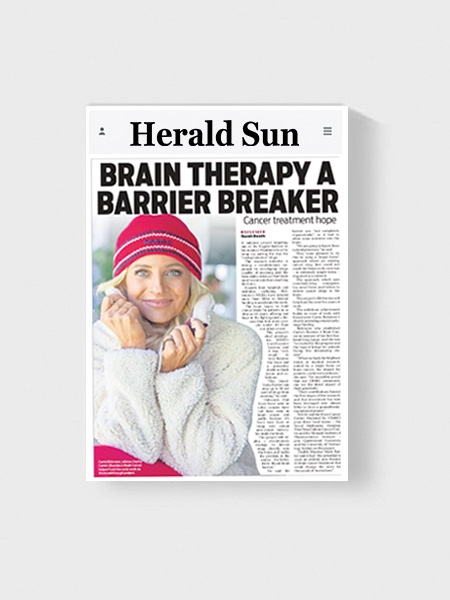
Aussie researchers will trial a “revolutionary strategy to deliver drugs directly into the brain”, giving fresh hope in the fight against a disease that kills more people under 40 than any other cancer.
– Herald Sun